
Worth keeping?
The sofa in this Maryport home was still comfortable and fitted the room perfectly. But the arms had darkened and the customer's favourite seat looked dull. Before buying a new one, they wanted to know whether cleaning would make enough difference.
Soiling or wear?
The most-used parts of a sofa can show both. We checked the fabric and looked closely at the problem areas, because similar-looking sofas can react differently to moisture and products. We also explained that cleaning would not restore worn fabric or change the sofa's structure.
Focusing on the arms and seats
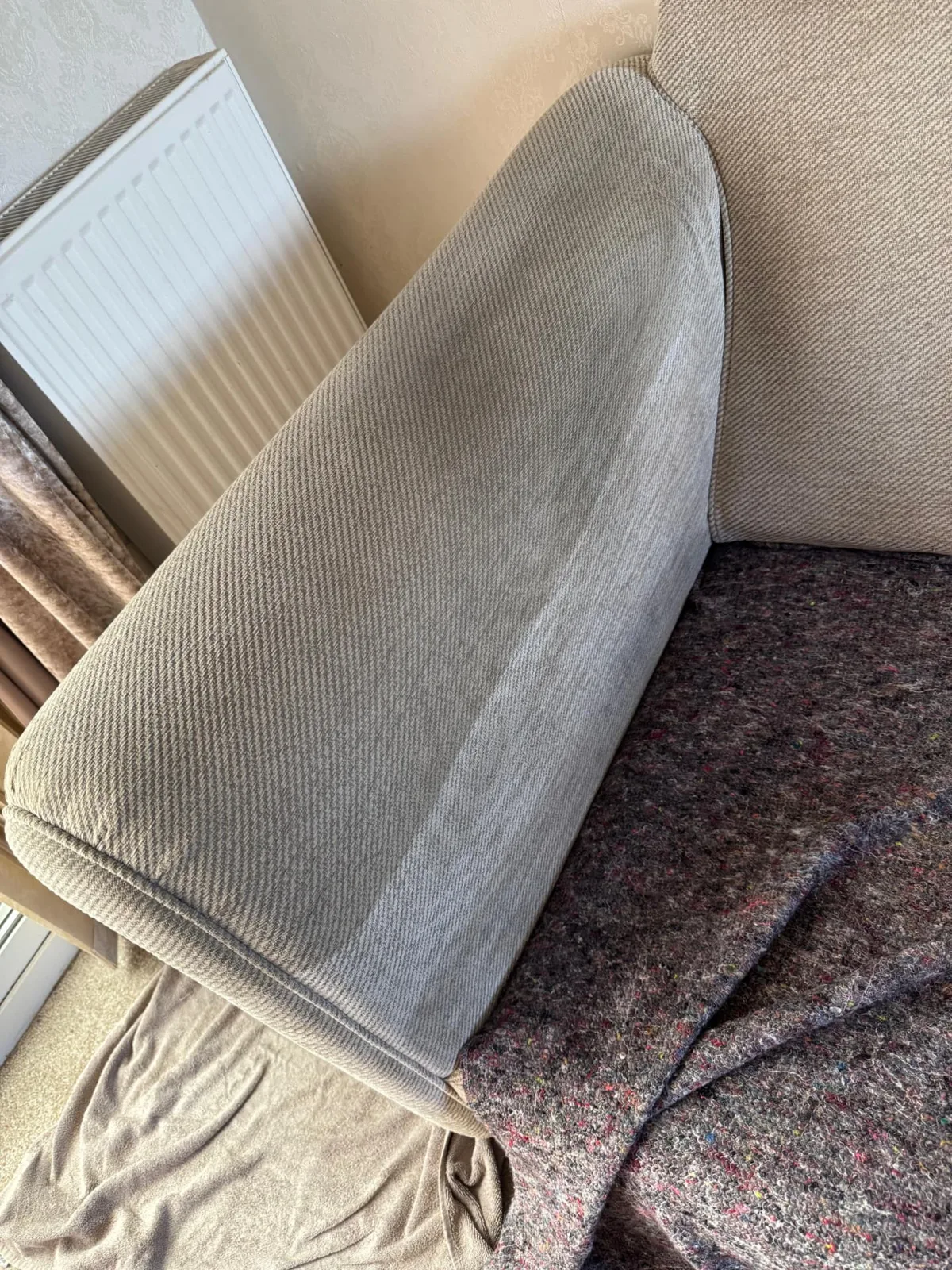
We treated the built-up soiling on the arms and seats, then cleaned the rest of the upholstery. The sofa looked fresher and more even, with the arms much less dark, while some existing wear on the favourite seat remained.
Thinking about your own sofa?
Send us photos of the whole sofa, close-ups of the problem areas and the care label if you can find it. Tell us whether your main concern is appearance, staining or odour, and what you have tried.
The reason for cleaning was appearance, not comfort
The customer’s sofa still fitted the Maryport room and remained comfortable. The darker arms and dull favourite seat made it look less inviting, so the question was whether cleaning would make it worth keeping. That is different from trying to solve sagging filling or a damaged frame.
Keeping that question clear helped us assess the likely value of upholstery cleaning. Cleaner fabric can make a serviceable piece more appealing, but it cannot resolve a structural problem that was never part of the cleaning scope.
The fabric needed its own assessment
We checked the fabric and the areas of concern before treating the sofa. Similar-looking upholstery can respond differently to moisture and products, and wear can resemble soiling at first glance. A photograph supports the enquiry but is not a fibre-identification test.
The sofa-arm image shows the appearance of the area, but the fabric and cleaning suitability cannot be established from a photograph alone. For your own item, a care label, treatment history and photographs of the whole piece give useful information before an appointment.
Arms, seats and the rest of the upholstery
The documented approach treated built-up soiling on the arms and seats before cleaning the remaining upholstery. The result was a fresher, more even appearance, with the arms less dark. Existing wear remained on the favourite seat.
Those two observations belong together: removable soiling improved, while worn fabric stayed worn. Describing the sofa as new would overstate the result and obscure the distinction that mattered to the customer’s decision.
How to assess a sofa you would like to keep
Think about whether appearance is the main concern. If the sofa still supports you comfortably, ask what cleaning might change and what will remain. If it is damaged or uncomfortable, discuss those issues separately rather than expect fabric cleaning to fix them.
For upholstery cleaning in Maryport, send the whole sofa, close-ups and the care label if available. Tell us about stains, smells and products used. Between cleans, follow the furniture manufacturer’s routine-care guidance rather than scrubbing the arms more aggressively.
Tell us about the carpet or furnishing, the issue and your postcode. We’ll discuss suitable work and realistic expectations.
Get My FREE QuoteRelated articles
- Is your sofa dirty or worn out?
Dirty upholstery and worn fabric can look alike. What cleaning may improve, what it can't fix, and how to decide.
- Before your sofa clean: what we need to know
Your furniture type, care label and a few clear photos help us advise on the right approach.