
A mark worth describing properly
A medication spill is worth describing accurately rather than calling it an ordinary household stain. Tell us what was spilt and what material is affected. The formulation, material and previous treatments need considering before a suitable next step is discussed.
Why the details matter
Tell us what the spill was, roughly when it happened, how much, and whether anything has already been applied. If you still have the bottle, packaging or leaflet, keep it to hand so we can see what was involved. Previous treatments change what is safe to try next, so mixing products or scrubbing the mark first can make the job harder.
Assessment before treatment
We consider the material, the age of the mark and what has already been applied. A suitable assessment and any testing inform the options; they do not guarantee a stain-free result. Marks that have changed the fabric colour may remain, so expectations should be discussed before treatment.
Leftover medication
If you are unsure what to do with any medication still in the house, ask your pharmacist or prescriber rather than pouring it away. They can tell you how to dispose of it safely. Send us photos of the mark, the whole piece of furniture or room, and your postcode, and we will talk through the next step.
The medicine name is useful, but not the whole description
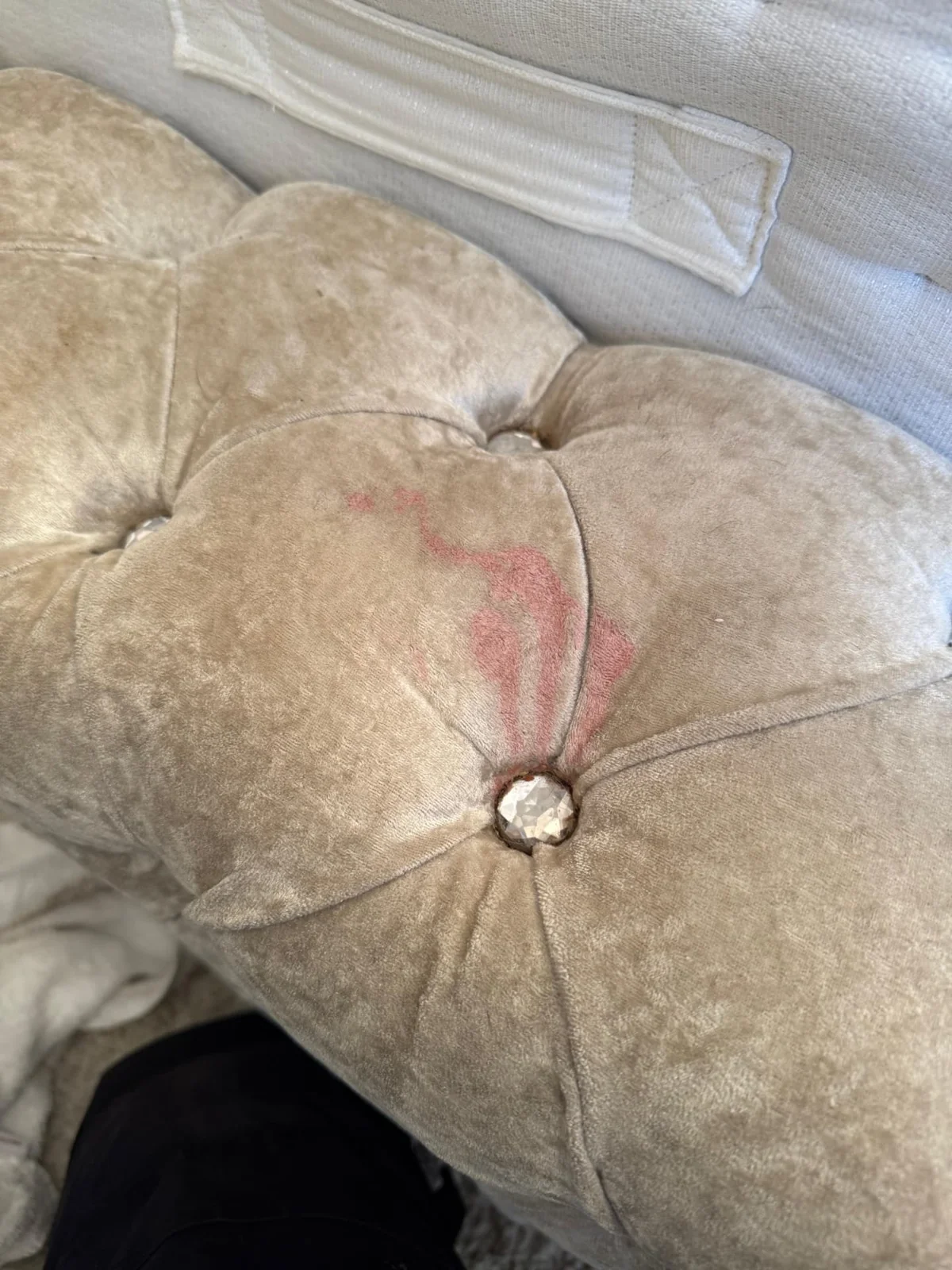
The cushion photograph shows a morphine stain identified by our owner, Dylan. It is an example of the concern, not a universal guide to stain colour or a guaranteed treatment. Different formulations may contain different ingredients, so the medication name alone does not establish what has been deposited on the fabric.
Keep the original packaging or product information available if you can do so safely. Tell us whether a liquid was spilt and be clear about anything you do not know. Do not dissolve tablets, handle loose medication or try to recreate the spill to demonstrate it.
Avoid turning a stain enquiry into an exposure risk
Keep children and pets away from the spill and avoid contact with unknown medication residues. If you need advice about exposure, dosage or the medicine itself, speak to an appropriate healthcare professional; a carpet or upholstery cleaner is not the right source for medical instructions.
Do not use heat, household chemicals or a mixture of remedies in the hope of finding a universal cure. We do not provide a medication-specific chemical recipe. A furnishings assessment must consider the actual material and previous applications.
What a cleaning assessment needs to consider
The fibre, finish, construction and condition affect what can safely be attempted. A mark may involve a removable deposit, a permanent colour change or both. Previous treatment can add residue or alter the fabric, so explain it even if the surface feels dry.
Testing helps inform suitability, but should not be turned into a promise of complete removal. The photograph shows the stain rather than an after-cleaning result. It illustrates why a material-specific assessment is more appropriate than promising restoration from the medication name alone.
Keep the enquiry focused on the furnishing
Send a wider photograph of the room or furniture, a close-up of the mark and any care label. Describe when the spill happened, its approximate extent and products already applied. Do not send personal medical records; the relevant information is the spilled product and the affected material.
We can discuss carpet or upholstery suitability and realistic expectations. For unwanted medicine, ask your pharmacist or prescriber about safe disposal rather than pour it away or treat it as ordinary cleaning waste.
Tell us about the carpet or furnishing, the issue and your postcode. We’ll discuss suitable work and realistic expectations.
Get My FREE QuoteRelated articles
- Spilled something on the carpet? Pause before treating it
Avoid mixing products or scrubbing a mark before checking the carpet's care instructions.
- Before your sofa clean: what we need to know
Your furniture type, care label and a few clear photos help us advise on the right approach.