
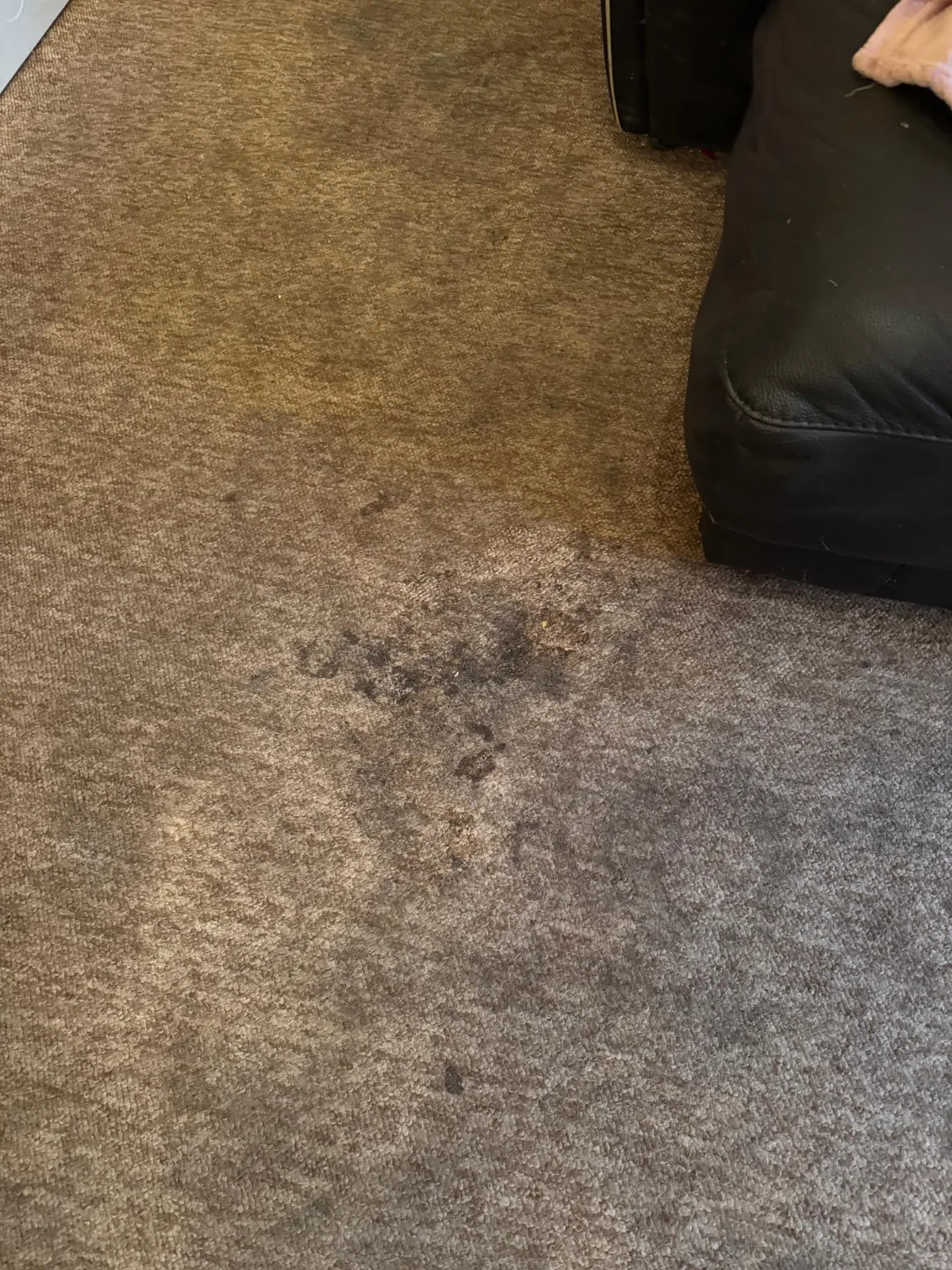
Check before you act
Different carpet materials need different care. Follow the manufacturer's instructions and do not assume a treatment suited to another carpet is suitable for yours. Avoid vigorous scrubbing, mixing products or adding multiple remedies to the same mark.
Keep a record
Note what was spilt, roughly when it happened and anything already applied. Take a clear photograph. These details help when asking for advice, even if the stain has changed since it first appeared.
Ask about the particular mark
Contact us with the details rather than trying to guess which product will work. Some changes to a carpet are permanent and cannot be reversed by cleaning. We will discuss the material and the mark before advising on treatment.
First, stop the spill spreading
Where it is safe to do so, lift loose solids gently without pushing them into the pile. For an ordinary liquid spill, use a clean absorbent white cloth or plain white kitchen roll to blot rather than scrub. Work carefully from the edge towards the centre.
This is conservative first aid, not a stain-removal recipe. If the substance is hazardous, unknown or a medicine, avoid contact and seek appropriate safety advice before attempting a clean. Do not use a household vacuum to collect liquid unless it is designed for that purpose.
Check the material before reaching for a product
Wool and synthetic fibres differ, and the carpet’s backing and construction also affect suitable care. A product recommended for a different carpet may be wrong for yours. Use fitting records or manufacturer information where available rather than guess from appearance.
Only use a suitable product according to its directions, including any inconspicuous test. Avoid pouring cleaner directly onto a patch or repeatedly saturating it. An unseen part of the carpet can still be damaged by an unsuitable treatment, so a test is not permission to ignore the care instructions.
Why scrubbing and extra cleaner can backfire
Scrubbing can disturb the pile and spread a mark. Too much liquid can carry a spill deeper, while cleaner left behind can create residue. Mixing products introduces another unknown when the stain is later assessed.
A pale area appearing after treatment may be colour loss, not successful stain removal. Stop if the texture or colour changes. Photograph the area and keep the product packaging so we can understand what happened rather than add another solution to an already altered patch.
When the mark remains
Record the substance, approximate time of the spill and everything applied afterwards. Send a close-up plus a wider picture showing the surrounding carpet. Tell us if the concern is a smell as well as a visible mark.
Professional assessment considers removable deposits separately from permanent dye changes or wear. Some stains can improve; others cannot be washed away. For a persistent spill mark, we can discuss suitable carpet cleaning or targeted attention without promising complete removal from a photograph.
Ask about our Carpet Cleaning serviceWool carpet care: manufacturer guidance
Tell us about the carpet or furnishing, the issue and your postcode. We’ll discuss suitable work and realistic expectations.
Get My FREE QuoteRelated articles
- Pet stains: why the details matter
What happened, when it happened and what you have already tried all help us assess the stain.
- Morphine stains on carpet and upholstery
What to tell us about a morphine spill on furnishings, with material checks and careful handling before treatment.