
Tell us what happened
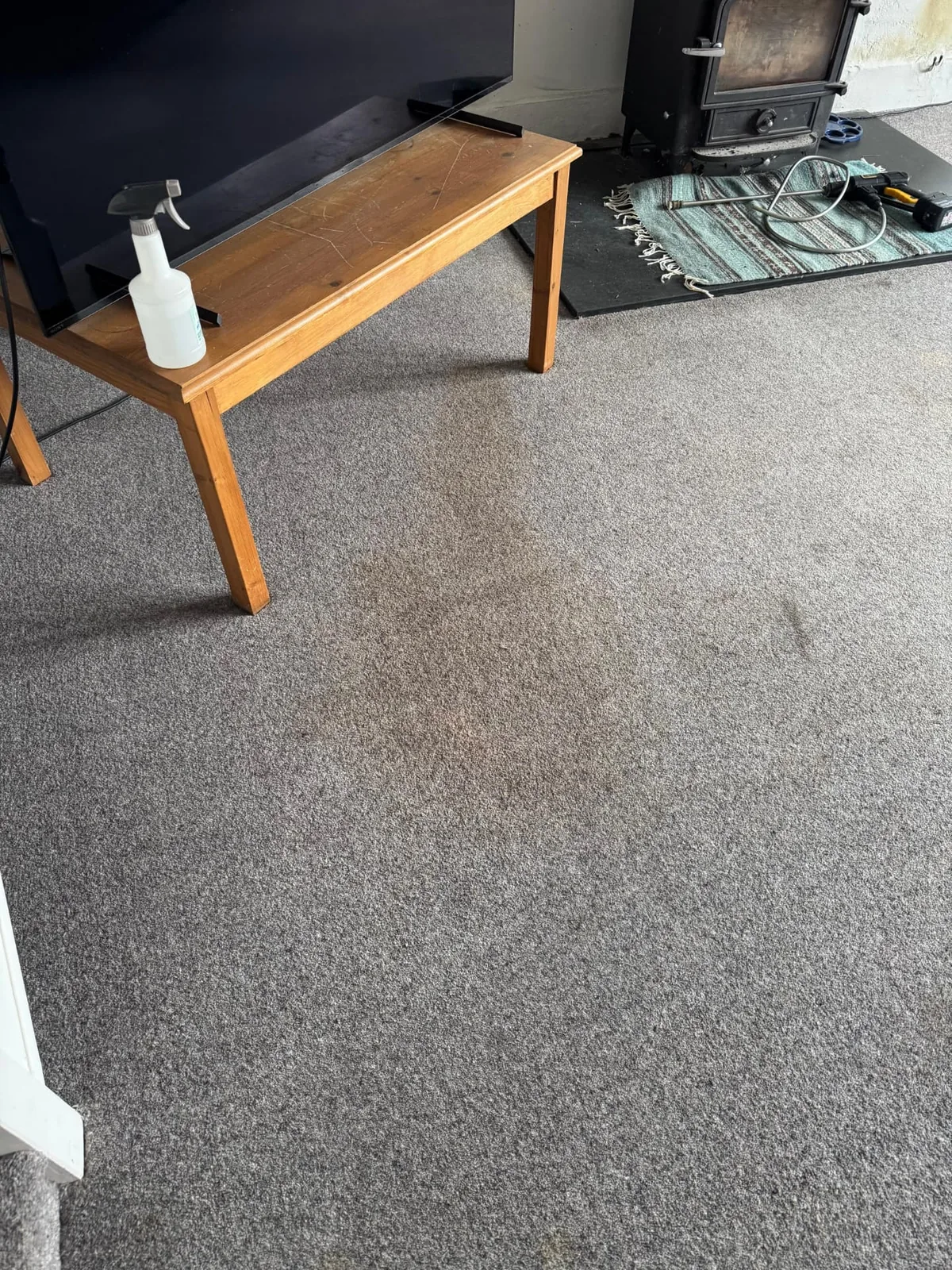
When you enquire about a pet stain, say whether it is on carpet or upholstery and how long it has been there, if known. A photograph is helpful, but it cannot show everything. Mention any smell as well as the visible mark.
Previous treatments count
Let us know about cleaning sprays, home remedies or hire machines already used. Do not mix cleaning products or keep adding treatments while waiting for advice. Previous applications can affect the condition of the material and the options available.
An assessment, not a blanket promise
Treatment depends on the material and the nature of the problem. We will discuss suitability for your carpet or furniture rather than promise a particular result. Send the details with your postcode so we can talk through the next step.
Describe the accident as clearly as you can
Urine, vomit and other pet accidents are not interchangeable cleaning problems. Say what you believe happened, and be clear if you do not know. A brown or yellow patch alone does not identify the substance, its age or whether it has reached beneath the pile.
There is no need to feel embarrassed about the details. Knowing whether the accident was recent, repeated or discovered after moving furniture gives us a better starting point than trying to diagnose it from colour alone.
Make a short treatment history
List sprays, detergents, home remedies and machine cleaning already attempted. Include where and roughly when each was used, and whether the smell or mark changed afterwards. Keep the packaging if possible; different products sold as carpet cleaners can have different instructions.
Do not mix products or keep increasing the amount because an earlier attempt did not work. Additional liquid may spread contamination or leave residue, while an unsuitable chemical may change the fibre or dye. A cleaner needs the history even if the label described a product as gentle.
Separate the visible stain from the smell
A photograph can document a mark but cannot show an odour. Tell us whether it is constant, noticeable when entering the room, or seems to return after the area has dried. These observations do not diagnose the cause, but they identify what you want the treatment to address.
Likewise, improving appearance does not establish that every affected layer has been treated. Some staining can represent permanent colour change. We discuss the carpet and the concern before making a recommendation, instead of promising a stain-free result from a photograph.
What to send with your enquiry
Our Pet Stain Treatment enquiry should focus on the affected area, not only the size of the room. If furniture is also affected, tell us separately so suitability can be considered through our upholstery service. Do not assume a carpet treatment should be transferred to another surface.
- Your postcode, the room and where the accident occurred.
- A wider photograph and a close-up, without adding liquid to the area.
- The likely substance, approximate age and whether accidents have happened repeatedly.
- Any smell, previous treatments and the main improvement you are hoping for.
Tell us about the carpet or furnishing, the issue and your postcode. We’ll discuss suitable work and realistic expectations.
Get My FREE QuoteRelated articles
- Can professional carpet cleaning remove pet urine smells?
Professional treatment can help, but the right approach depends on how far the urine has soaked in.
- Spilled something on the carpet? Pause before treating it
Avoid mixing products or scrubbing a mark before checking the carpet's care instructions.